

Every year, South African businesses spend millions on printed marketing material.
Brochures. Flyers. Event handouts. Rep leave-behinds. Show day packs.
Most of it is in a bin before the day is out.
That’s not cynicism — it’s physics. A glossy flyer competes with every other glossy flyer in the pile. It has seconds to make an impression, and nowhere to go once it’s been glanced at. The person moves on. The paper doesn’t.
But what if the flyer wasn’t the end of the story?
What if the branded material your company handed out at a property show day, a pharmaceutical conference, or a corporate event actually did something after it left your hands?
That’s the idea behind seed paper — and it’s changing the way forward-thinking South African brands think about print marketing.
The Problem With Traditional Print Marketing
Let’s be honest about what happens to most printed marketing material.
A property developer prints 500 glossy brochures for a new development launch. Show day comes. Visitors pick them up, flip through them, and set them down. A handful go home in handbags. The rest get stacked, discarded, or quietly binned by the venue staff at the end of the day.
A pharmaceutical rep leaves branded notepads and pens at a GP’s rooms. They sit in a drawer with seventeen other branded notepads and pens from seventeen other companies.
The problem isn’t the quality of the print. It’s that print, on its own, has no second act.
Once someone has read your flyer — or decided not to — it has nowhere to go. It either gets kept out of obligation or thrown away. Neither outcome builds brand memory.
And then there’s the environmental question. South Africa produces hundreds of thousands of tonnes of paper waste annually. A significant portion of that is marketing material that served a single purpose and was discarded. For brands building sustainability credentials — and increasingly, all brands need to — that’s a growing liability.
What Makes Seed Paper Different
Seed paper is handmade paper embedded with real seeds — herbs, fynbos, wildflowers, or vegetables — pressed into recycled paper pulp during the manufacturing process.
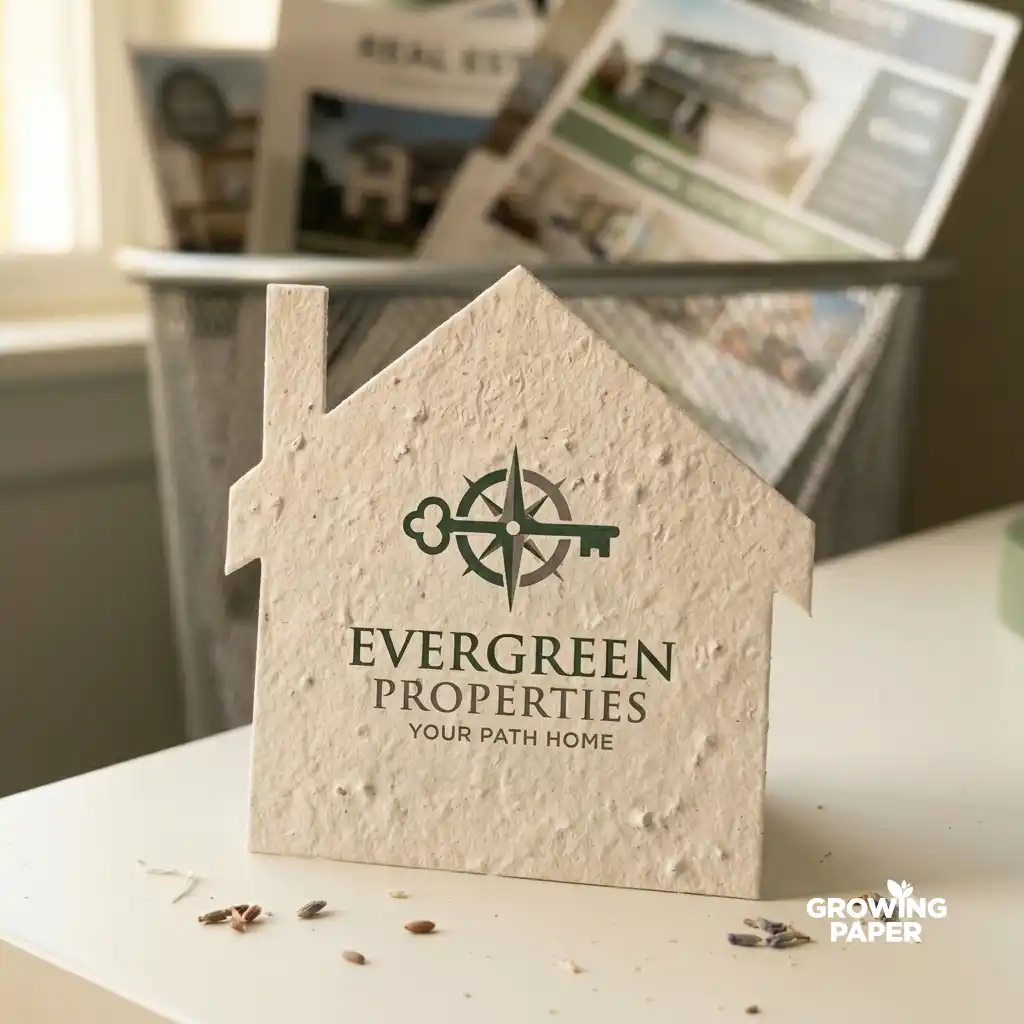
It looks and feels like premium paper. It prints cleanly. It can be die-cut into any shape — a house, a leaf, a flower, a medical cross, your brand logo.
The difference is what happens next.
When someone plants the paper — pressed into soil, kept moist — it breaks down within days and the seeds germinate. Within one to three weeks, something green is growing.
Your brand, quite literally, keeps growing after the interaction ends.
This changes the entire dynamic of a branded handout:
It gets kept. People don’t throw away something they intend to plant. The flyer sits on a desk, a windowsill, a kitchen counter — in plain sight — for days or weeks before it’s planted.
It gets noticed. Seed paper feels different in the hand. The texture, the weight, the visible seeds — it triggers curiosity. People ask about it. They show it to colleagues.
It gets remembered. When the seedling appears, the person who planted it has a tangible, living connection to your brand. That is the kind of recall no pen or notepad can create.
The Die-Cut Difference
At Growing Paper, every flyer is die-cut to shape — which means the shape itself becomes part of the message.
For real estate clients, we cut house shapes for show day flyers and development launches. For pharmaceutical clients, we cut leaf shapes, crosses, and capsule shapes for rep leave-behinds and conference material.
The shape communicates your industry before anyone reads a word. Combined with your logo, brand colours, and messaging, you have a piece of marketing material that is instantly recognisable as yours — and impossible to confuse with anything else in the pile.
This matters in environments where everyone is handing out something. At a property show day, at a pharmaceutical conference, at a trade exhibition — the die-cut seed paper flyer is the one people remember picking up.
Why This Matters for Sustainability-Conscious Brands
Both the real estate and pharmaceutical industries are under growing pressure to demonstrate genuine sustainability commitments — not just talk about them.
ESG reporting, CSR targets, green building certifications, environmental compliance — these are no longer optional for enterprise brands. They are table stakes for corporate clients, investors, and an increasingly environmentally aware consumer base.
Traditional print marketing works against this narrative. Plantable seed paper works for it.
When your branded material is itself a demonstration of your environmental values — when it produces food, flowers, or fynbos instead of landfill — it becomes a proof point, not just a claim.
For a pharmaceutical company communicating a wellness brand. For a property developer selling eco-conscious living. For any business that wants its marketing spend to align with its stated values — seed paper is the rare solution that delivers on both counts.
A New Kind of Brand Impression
The best marketing doesn’t feel like marketing. It feels like a gift, an experience, a story.
Seed paper flyers do something most branded material can’t: they create a moment of genuine delight. When someone realises they’re holding something they can plant — that it will grow into something real — there is a shift in how they feel about the brand that gave it to them.
That feeling is difficult to engineer with a glossy brochure. It happens naturally with seed paper, every single time.
At Growing Paper, we make every flyer by hand in South Africa, using locally sourced recycled materials and seeds suited to the South African climate. Every order is custom — shaped, seeded, and printed to your brief.
If you’re ready to make marketing material that lasts longer than the bin, we’d love to show you what’s possible.
Request a free sample pack at growingpaper.co.za
Frequently Asked Questions
Does seed paper actually grow?
Yes. Every sheet of Growing Paper is embedded with real seeds during the handmaking process. When planted in soil and kept moist, the paper breaks down within a few days and the seeds germinate. Most varieties show growth within one to three weeks, depending on the seed type and conditions.
What seeds are used in the paper?
We use a range of seeds suited to the South African climate, including fynbos, wildflowers, herbs such as basil and thyme, and vegetables. The seed variety can be selected based on your brief — for example, wellness-oriented herb seeds for pharmaceutical clients, or indigenous fynbos for property developers marketing eco-conscious developments.
Can seed paper be printed on?
Yes. Seed paper accepts printing cleanly, including logos, brand colours, and text. We recommend working with us on print specifications to ensure the best result on the paper’s natural texture.
What shapes can seed paper be die-cut into?
Virtually any shape. Common choices include leaves, houses, flowers, crosses, stars, hearts, and custom brand logo shapes. If you can draw it, we can cut it. We work with you to develop the right shape for your campaign.
How long does seed paper last before it needs to be planted?
Seed paper has a shelf life of approximately 12 to 24 months when stored correctly — kept dry, away from direct sunlight, and in a cool environment. This makes it suitable for bulk ordering ahead of campaigns and events.
Is seed paper more expensive than regular printed flyers?
Seed paper is a premium product and is priced accordingly. However, when measured against brand recall, longevity of impression, and sustainability value, most clients find it delivers significantly better return than standard print. We work with clients on quantities and specifications to find a solution that fits the campaign budget.
Is Growing Paper suitable for large corporate orders?
Yes. We work with pharmaceutical companies, property developers, real estate agencies, and corporate marketing teams on orders of varying sizes. Get in touch to discuss your requirements and we’ll provide a custom quote.
Where is Growing Paper made?
All our seed paper is handmade in South Africa using locally sourced recycled materials. We are proudly South African and committed to keeping our production local.


